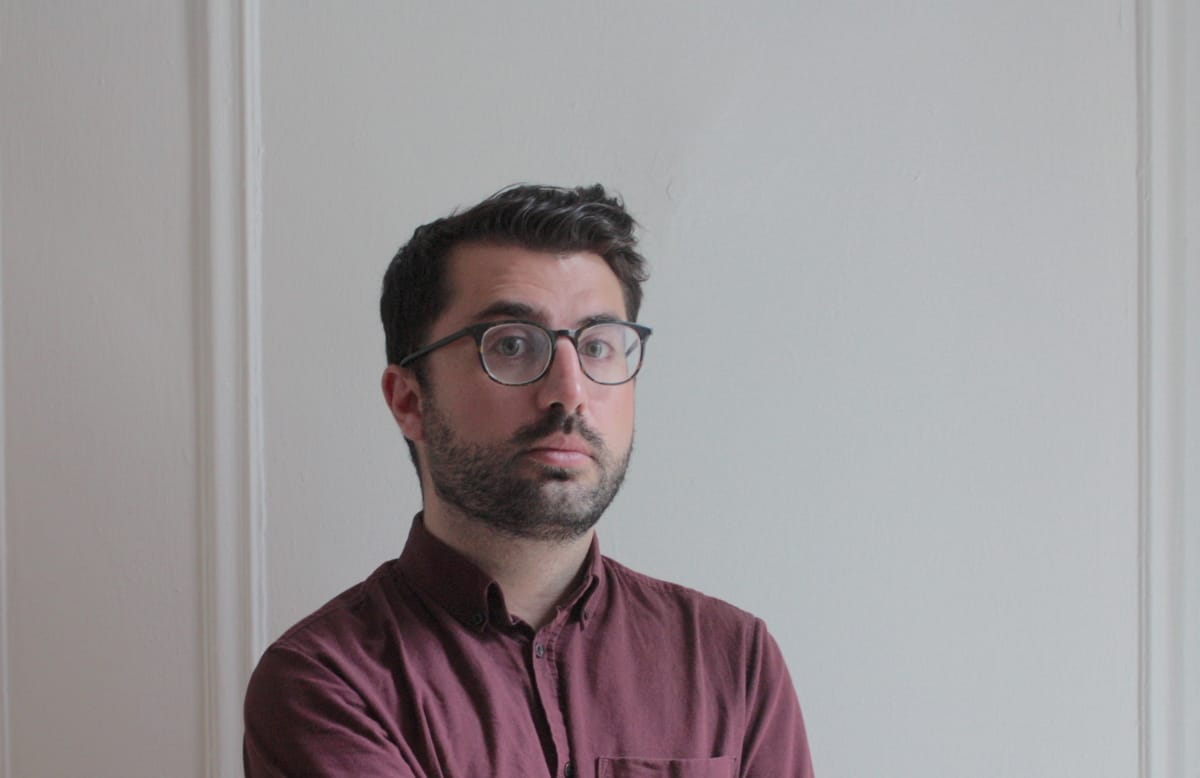
Three weeks til Cannes! Just an independent critic standing in front of his readers, asking them to send him to France.

Courtesy of HBO
When Richard Gadd’s Baby Reindeer premiered to such success and acclaim, I had a sort of cruel worry about it. With a memoir piece that shocking and specific, one has to wonder if maybe that was the Great Story that Gadd had to tell—and thus, like so many other memoirists before him, he’d be out of ideas after that. With that in mind, I approached Gadd’s new series, Half Man (HBO, April 23), with a certain wariness, prepared to be stuck with yet another confessional storyteller who has no more guts to spill.
In actuality, Half Man is perhaps an even deeper dive into Gadd’s psyche than was Baby Reindeer. It might be less autobiographical (I think?), but it nonetheless lays bare much of Gadd’s psyche, particularly his endlessly conflicted attitudes about gender and sexuality. A brutal, bleak sit, Half Man is also rather extraordinary—at least, when it works.
The story takes place across decades, from somewhere in the 1980s (ish) to the present day. We follow two stepbrothers, bound together in a lower-middle-class Scottish household when their moms begin a relationship, a violation of social norms that (further) isolates them from their peers. One is Niall, a nerd relentlessly picked on at school, particularly targeted for his perceived gayness. The stepbrother whom Niall is terrified of, but also endlessly intrigued by, is Ruben, a handsome, swaggering fresh-from-juvie delinquent who seems well aware of his power over his shy new housemate.
Gadd is pretty blunt in picking at a particular taboo, the implication that there is intense sexual energy passing between Niall and Ruben. Perhaps Ruben feels it more acutely, but Ruben certainly courts the attention, bends it to his will, uses it as some sort of tacit proof of his superior masculinity. Niall in turn gets protection: Ruben roughs up Niall’s classroom antagonizers, acting the protective brother—or lover.
This arrangement is awfully fraught, but it works well enough until Niall, nervous and elated to be leaving home, heads to university. There he begins exploring his sexuality, particularly with a cute, charming flatmate. Niall seems on the verge of breaking free of Ruben’s spell until Ruben makes a terrible intrusion into Niall’s new life. This sets the stage for years of push and pull between the brothers, Niall spinning into what might be called sex addiction (and other sorts of addiction) while Ruben lurks in the periphery, waiting to pounce.
The grownup section of Half Man is wobblier, less persuasive, more reliant on dramatic coincidence and soapy conflict. But it’s still grimly compelling, a deep dive into the misery of, to use a beleaguered phrase, toxic masculinity. Niall and Ruben may be two halves of Gadd himself, representatives of an unending conflict between aberrant desire and a yearning to satisfy societal expectations of manhood. That’s territory that’s been tilled plenty already, but I’ve seen little else that takes such a brutal and despairing angle of attack on the subject.

The rest of this dispatch is for paying subscribers.
Subscribe for $10/month to unlock this and every edition of Premiere Party: full reviews, awards-season intel, and TV recaps from Richard Lawson.
Upgrade